
Version française : Chalet à louer avec sauna dans les Laurentides
A chalet with a sauna in the Laurentides brings the Nordic spa experience home: heat, a cold plunge or a snow bath, then rest by the fire. More and more rental chalets now offer a private sauna, sometimes in addition to a hot tub. But saunas vary a lot, from a small electric cabin in the basement to a wood-fired barrel sauna by the lake. This guide explains the different types, the questions to ask before booking, how to do a hot-cold cycle safely and what to expect in price.
Quick answer
- Types: electric (easiest), wood-fired (most authentic), barrel (outdoor, often lakeside) and infrared (lower temperature).
- Ask: sauna type, indoor or outdoor, heat-up time, capacity, whether firewood is included and whether it is private.
- Safety: short sessions, plenty of water, no alcohol, supervise children, never plunge alone into icy water.
- Price: a sauna usually adds to the nightly rate; compare against chalets with only a hot tub.
Sauna or Hot Tub: Which One Fits Your Stay?
| Criteria | Sauna | Hot tub |
|---|---|---|
| Experience | Dry or steam heat, hot-cold cycle | Hot water, massage jets, socializing |
| Hygiene | Simple; towels on benches | Depends on water treatment and maintenance |
| Winter use | Excellent; snow bath between sessions | Excellent, but cold path to the tub |
| Setup time | 20 to 60 minutes to heat, depending on type | Usually ready on arrival |
| Group size | Often 2 to 6 people at once | Often 4 to 8 people |
Many guests find that a chalet with both a sauna and a hot tub is the ideal combination in winter. If the hot tub is your priority, see our page on chalets with a private hot tub.
The Four Main Types of Chalet Saunas
- Electric sauna: a heater with stones, controlled by a thermostat. It is the most common and easiest to use, usually ready in 30 to 45 minutes.
- Wood-fired sauna: a wood stove heats the room. The heat is softer and more authentic, but it takes more time, firewood and supervision.
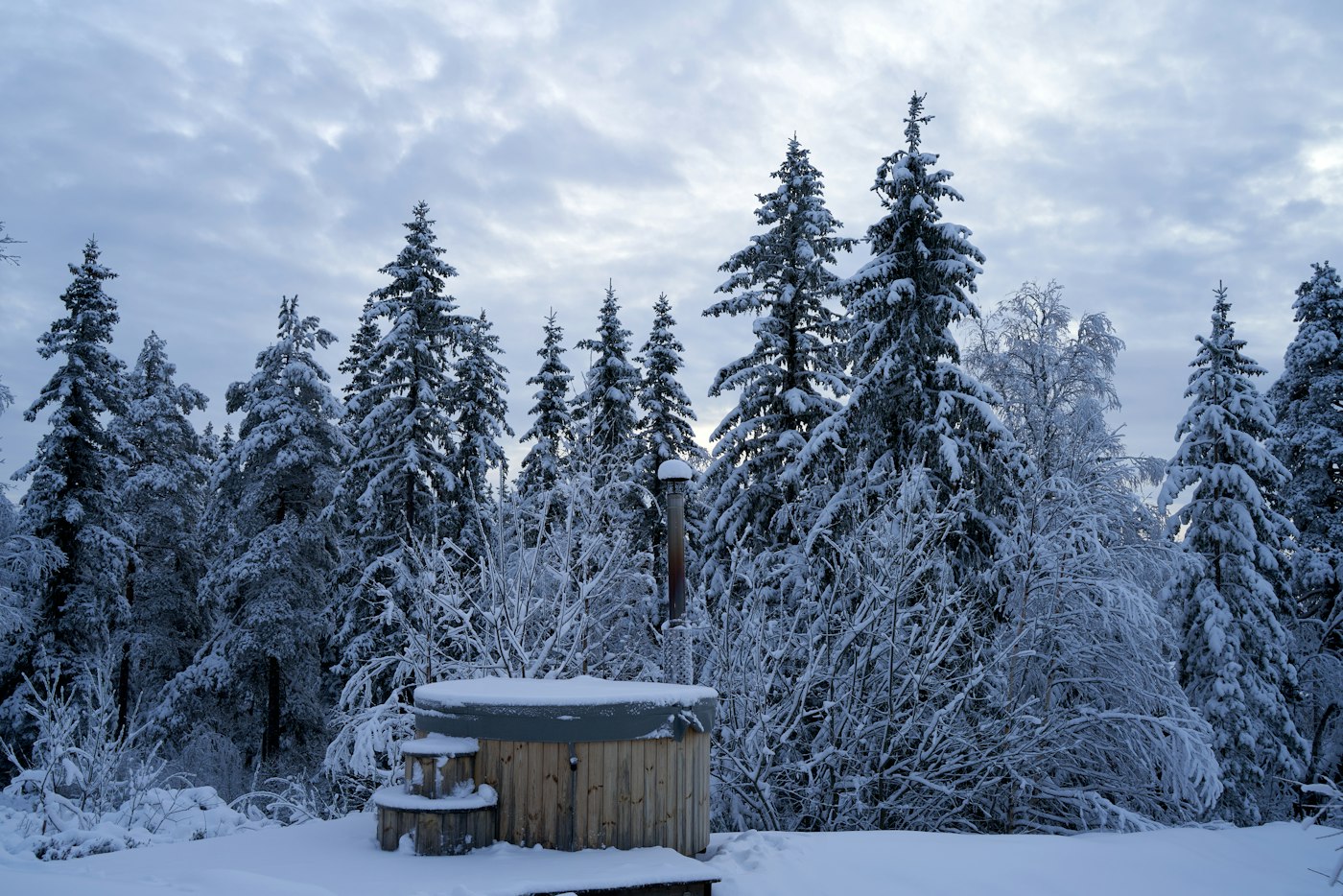
- Barrel sauna: a round outdoor cabin, often near the lake or in the forest, heated by wood or electricity. Great for a view and a snow bath.
- Infrared sauna: panels heat the body directly at a lower air temperature. Comfortable for people who dislike intense heat, but it does not create steam.
Questions to Ask the Owner
- What type of sauna is it, and is it indoors or outdoors?
- How long does it take to heat, and who turns it on?
- Is it private to your chalet or shared with other units?
- For a wood-fired sauna: is firewood included, and are there written instructions?
- Is there a shower nearby, and are sauna towels provided?
- Is the path to the sauna lit and cleared of snow in winter?
- Are children allowed in the sauna, and is there a minimum age?
Ask for recent photos of the sauna itself, not just the chalet. A “sauna” in a listing can be a small corner cabin or a large dedicated building.
How to Do a Nordic Cycle at the Chalet
The classic Scandinavian ritual alternates heat, cold and rest. A simple routine for healthy adults:
- Heat: about 8 to 15 minutes in the sauna, sitting or lying down, leaving earlier if you feel uncomfortable.
- Cold: a cool shower, a few seconds in the snow or a quick dip, always gradually.
- Rest: 10 to 20 minutes wrapped in a robe, by the fire or on the deck, while drinking water.
- Repeat: two or three cycles are plenty.
Many people use the lake as a cold plunge in summer. In winter, never enter an ice hole or a frozen lake alone, and only where the ice is known to be safe.
Sauna Safety Rules
- Drink water before, during and after; avoid alcohol before and during sessions.
- Keep sessions short, and get out at the first sign of dizziness or nausea.
- Supervise children closely and limit their time and temperature.
- If you are pregnant or have heart problems, high blood pressure or another medical condition, ask a health professional before using a sauna.
- For a wood-fired sauna, follow the owner’s instructions, keep the door clear, never leave the fire unattended and dispose of ashes only in a metal container.
- Make sure there is a working smoke detector in the building.
Our wood stove and fireplace safety guide (in French) also applies to wood-fired saunas.
Where to Find Sauna Chalets in the Laurentides
Sauna chalets are found across the region, with a higher concentration around Mont-Tremblant, Lac-Supérieur, Val-des-Lacs, Saint-Adolphe-d’Howard and Morin-Heights, where many newer and renovated chalets target couples and small groups. Lakeside barrel saunas are more common in the Rouge River area and around Labelle and La Minerve. Compare sectors in our guide to the best areas to rent a chalet.
Price and Booking Tips
- A private sauna usually raises the nightly rate compared with a similar chalet without one.
- Use rental platform filters for “sauna”, then read each listing carefully to confirm it is private.
- Book early for winter weekends, the holidays and spring break, when sauna chalets are in high demand.
- Check the total price, including cleaning and lodging tax, and the cancellation policy; see our guide to deposits and cancellations.
If you prefer a full Nordic spa with pools and services, a spa hotel might suit you better; see our sister site hotels.thelaurentides.com.
Find a chalet with a sauna in the Laurentides on Expedia
What to Bring
- Two towels per person: one for the bench, one for drying
- Robe and sandals for the walk outside
- Water bottles
- Wool hat for the hot-cold cycle in winter
- Headlamp for an outdoor sauna at night
FAQ
Are there many chalets with saunas in the Laurentides?
Yes, and the number has grown in recent years. Use the sauna filter on rental platforms and confirm that the sauna is private before booking.
How long does a chalet sauna take to heat?
Usually 30 to 45 minutes for an electric sauna and up to an hour for a wood-fired sauna, depending on the size and the outside temperature.
Can children use the sauna?
It depends on the owner’s rules and the child’s age. Children should be closely supervised, with shorter sessions and lower temperatures.
Is it safe to jump in the lake after the sauna?
In summer, a gradual dip is a common practice for healthy adults. In winter, never go on or into an ice-covered lake alone or where the ice has not been checked.
Sauna or hot tub: which is better in winter?
Both are popular. The sauna is ideal for a hot-cold cycle with a snow bath, while the hot tub is better for socializing in a group. Many chalets offer both.
Conclusion
A chalet with a private sauna turns a Laurentides weekend into a real wellness retreat. Know which type you are booking, ask the right questions about heating time, privacy and firewood, follow simple safety rules, and plan two or three relaxing hot-cold cycles a day. For more planning help, see our chalet rental guide.